Services
Evaluation that helps organizations learn, improve, and report outcomes and impact.
Every organization has different questions, capacities, and resources. Evidence2Impact designs right-sized approaches that provide credible evidence without creating unnecessary burden.
Visual placement: Follow this introduction with the revised Organizational Learning Cycle in a section titled “How organizations learn and improve.” Keep all six stages readable and explain that support can begin at any stage. Follow the graphic with the six service areas below; see Section 7 for supporting copy and treatment.

Program Evaluation & Impact Assessment
Assess how a program is being delivered, whether it is meeting expectations and reaching intended outcomes, and how it contributes to change in local communities. Gather new evidence and review existing information to understand what works, what needs to improve, and why.
Evaluation questions, plans, and designs matched to program needs
New qualitative and quantitative data collection, including surveys, interviews, and focus groups
Review and analysis of existing program data and participant feedback
Assessment of implementation, outcomes, and contribution to community change
Clear findings, recommendations, and evaluation reports
Logic Models & Theories of Change
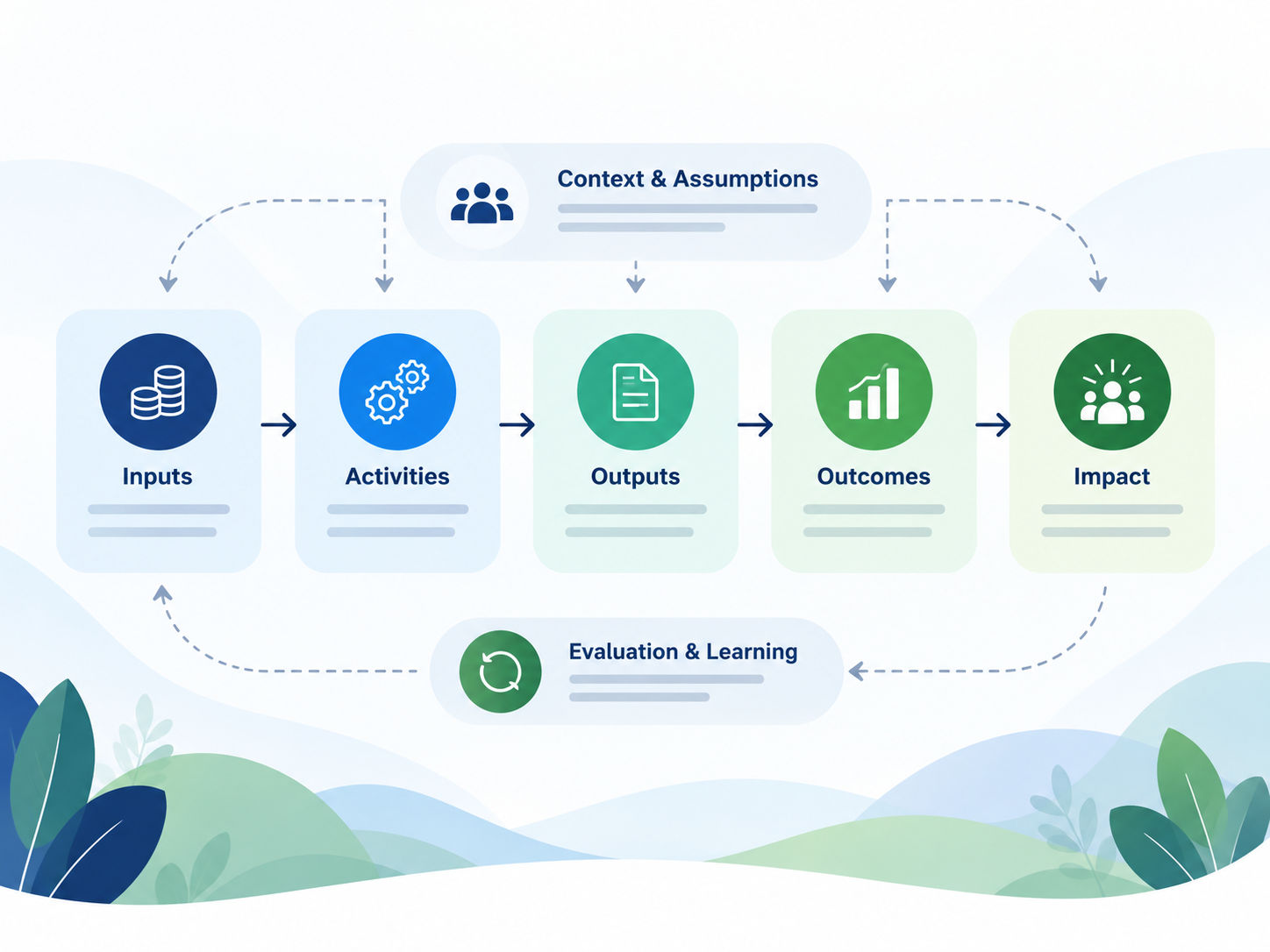
Create a shared picture of how your program is expected to create change. Connect activities to intended outcomes and make the assumptions behind your approach clear.
Facilitated discussions with staff and relevant partners or participants
Mapping of resources, activities, outputs, and short- and longer-term outcomes
Identification of assumptions, context, and factors that may influence results
Clear logic model or theory of change visuals and supporting explanations
Alignment with evaluation questions and measures; review as the program evolves

Monitoring, Evaluation & Learning Frameworks
Build a practical monitoring, evaluation, and learning (MEL) framework that connects your intended outcomes to measures, evidence collection, reflection, and reporting. Make the approach useful for day-to-day program management and periodic evaluation.
Outcome and performance measure selection, definitions, baselines, and targets
Data-collection methods, tools, timing, and staff responsibilities
Plans to monitor performance and evaluate results
Data quality assessments and improvements to existing collection methods
Learning questions, review routines, and reporting schedules
Measure what matters. Develop indicators that track both what your program delivers and the changes participants experience—then combine those measures with feedback and evaluation to understand what the results mean.
Data Systems & Dashboards
Develop or improve practical systems for collecting, organizing, and using information. Give staff a clearer view of progress and the tools to maintain reliable data over time.
Review of current tracking systems, data flows, and information gaps
Data-collection forms, survey tools, and consistent definitions
Practical data-tracking systems and workflows suited to staff capacity
Dashboards and visual summaries of performance and outcome measures
Data quality checks, documentation, and guidance for ongoing use
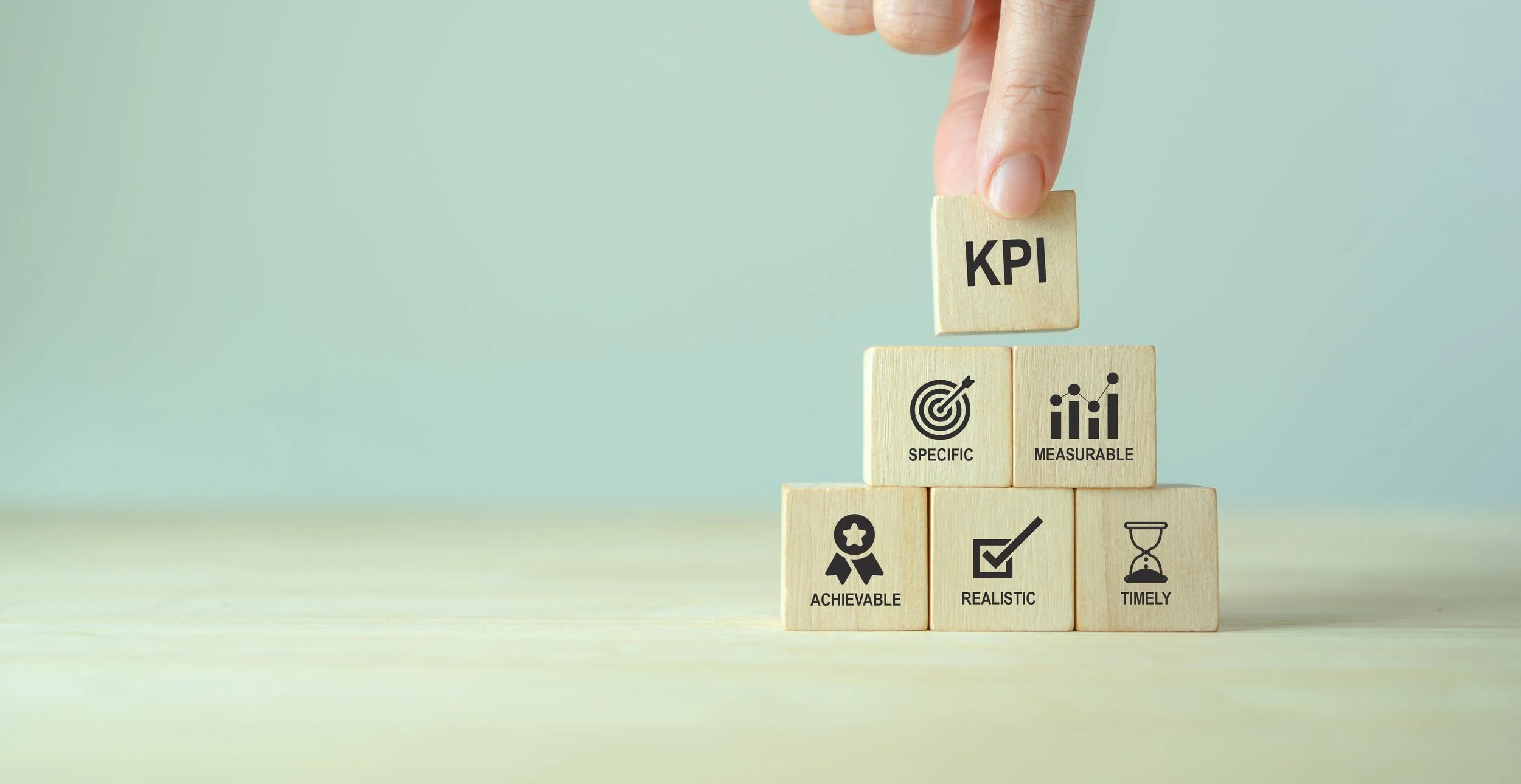
Optional supporting image: The KPI blocks (iStock 1483487772) may serve as a small accent here or in Monitoring, Evaluation & Learning Frameworks. Keep the KPI label legible and the service explanation more prominent.


Training & Capacity Building
Build staff skills and confidence in planning evaluation, deciding what to collect, interpreting findings, and reporting outcomes and impact. Use practical workshops, coaching, and reusable tools that fit the team’s work.
Coaching on evaluation planning, logic models, and theories of change
Training on performance measures and what data to collect, when, and how
Data quality assessments and practical checks staff can maintain
Interpretation of qualitative and quantitative findings
Outcome and impact reporting skills, templates, and practice
Routines for team reflection, learning, and use of findings
Preferred supporting photograph: Place the facilitated group discussion image (iStock 1356385563) beside this section. Preserve the interaction when cropping; use as illustrative stock, not a named client workshop.
Outcome & Impact Reporting
Turn credible evidence into clear reports and stories that explain what changed, for whom, and what the findings mean. Help funders, boards, staff, and communities understand outcomes, progress, and learning.
Outcome summaries, impact briefs, and evaluation report development
Funder, board, and leadership reporting
Reusable reporting templates and reporting processes
Data visualization, presentations, impact stories, and case examples
Synthesis of quantitative and qualitative evidence for nontechnical audiences
Clear distinctions between activities delivered and outcomes achieved, with appropriate context, limitations, and contribution claims